
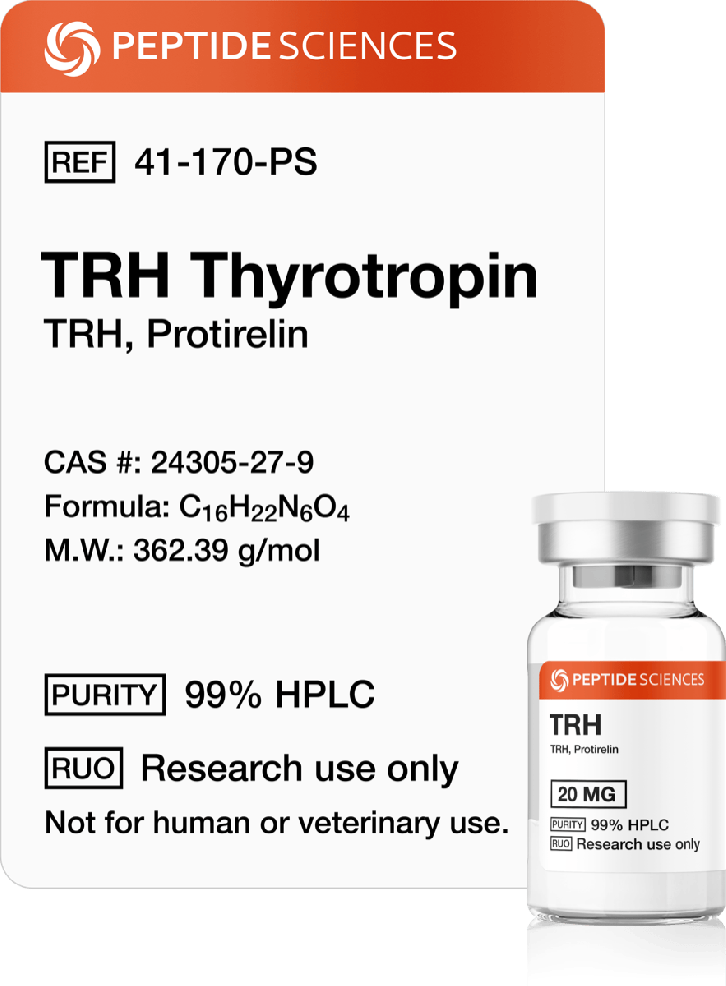
What is TRH (Protirelin)?
Protirelin (TRH) is a synthetic form of a natural brain hormone called thyrotropin-releasing hormone.
It is a tripeptide hormone made of:
- Pyroglutamyl
- Histidyl
- Prolinamide
It is produced in the hypothalamus and controls the release of thyroid-related hormones.
What does TRH do?
TRH primarily acts on the pituitary gland to stimulate:
- TSH (thyroid-stimulating hormone)
- Prolactin
This then indirectly affects:
- Thyroid hormone production (T3/T4)
- Metabolic regulation
- Endocrine feedback systems
In clinical physiology, TRH is part of the hypothalamic–pituitary–thyroid axis.
What “TRH 2mg” usually refers to
When you see “TRH 2mg”, it typically means:
- A research-grade vial of protirelin
- Containing a measured amount (often 2 mg total powder)
- Used in laboratory or diagnostic contexts
However, clinically, TRH is usually administered in:
- microgram (mcg) doses, not milligrams
For example, diagnostic protocols often use ~200–500 mcg IV, not mg-scale dosing. (Drugs.com)
👉 This is a key point: 2mg is not a standard medical dose format
Medical use (approved context)
TRH (protirelin) is mainly used for:
1. Diagnostic testing
- Evaluating pituitary function
- Checking TSH response
- Differentiating thyroid vs pituitary issues (Drugs.com)
2. Endocrine research
- Studying hormone regulation
- Mapping hypothalamic–pituitary signaling
How it works in the body
After administration:
- TRH reaches the pituitary gland
- Triggers a rapid increase in TSH
- TSH stimulates the thyroid gland
- Effects are short-lived due to fast breakdown
TRH has a very short half-life (~minutes) in circulation. (Drugs.com)
Regulatory status
TRH / protirelin is:
- ❌ Not FDA-approved for general therapy
- ✔ Used mainly for diagnostic and research purposes
It is typically handled only in clinical or controlled laboratory settings.
Important safety considerations
TRH affects multiple hormone systems, so it can influence:
- Blood pressure changes
- Heart rate
- Prolactin levels
- Neurological responses (headache, nausea reported in studies) (Drugs.com)
Because of this, it is not used casually or independently outside clinical supervision.
Why “TRH 2mg” is commonly searched
Search interest usually comes from:
- Hormone optimization discussions
- Thyroid/pituitary testing curiosity
- Peptide research communities
- Biohacking forums
But in actual medicine, TRH is primarily a diagnostic tool, not a supplement or therapy product.
SEO strategy (important for your site)
To rank safely and avoid policy issues, do NOT target:
Instead use:
- “TRH (Protirelin): What It Is and How It Works”
- “Thyrotropin Releasing Hormone Explained (TRH Guide)”
- “TRH Stimulation Test: Uses, Procedure & Results”
This helps you:
- Capture search traffic safely
- Avoid ad platform restrictions
- Build authority in endocrine/peptide topics
Bottom line
TRH (protirelin) is a potent hypothalamic hormone used mainly for diagnostic evaluation of thyroid and pituitary function, and “2mg” refers to a research vial format—not a standard medical dosing product or consumer treatment.
Reviews
There are no reviews yet.