
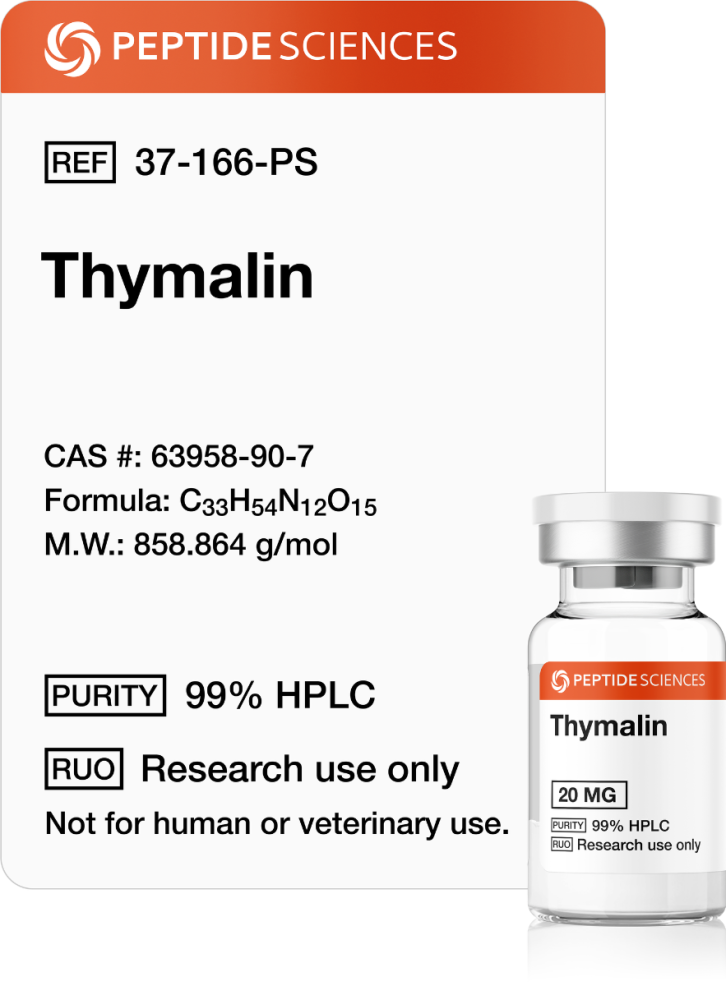
What is Thymalin?
Thymalin is a thymus-derived peptide bioregulator developed in Soviet-era medical research. It is a mixture of short regulatory peptides originally extracted from calf thymus tissue and later standardized into synthetic forms.
It is part of the broader “Khavinson peptides” family, studied for immune system regulation and cellular aging processes. (Peptides Institute)
What does Thymalin do?
Thymalin is primarily studied for its effects on the immune system, especially:
- T-cell development and differentiation
- Immune system balance (adaptive immunity)
- Regulation of immune aging (immunosenescence)
- Gene expression in immune cells
The thymus naturally shrinks with age, and Thymalin is researched as a way to support thymic immune function indirectly. (Peptides Institute)
What “Thymalin 20mg” means
When you see “Thymalin 20mg”, it usually refers to:
- A lyophilized (freeze-dried) peptide vial
- Containing a total of 20 mg of peptide mixture
- Used in laboratory or research contexts only
Typical specifications from suppliers include:
- High purity (often ≥98–99%)
- Stored at −20°C
- Not standardized as a human dose (MEDICA DEPOT)
How it is used in research
In scientific and experimental contexts, Thymalin is studied for:
1. Immune restoration
- T-cell activation and maturation
- Immune response normalization
2. Aging-related immune decline
- Research into immunosenescence
- Support of thymic signaling pathways
3. Cellular regeneration models
- Gene expression regulation in immune tissue
- Tissue repair signaling pathways (Peptide Database)
Important distinction: Thymalin is not a supplement
Thymalin is:
- ❌ Not a dietary supplement
- ❌ Not FDA-approved
- ✔ Used in limited clinical and research settings
In Russia and Eastern Europe, it has historically been used in medical contexts for immune disorders, but it remains largely unapproved in Western regulatory systems. (PeptaHub)
Why “Thymalin 20mg” is often misunderstood
A few key issues cause confusion:
1. Naming confusion
- Thymalin, Thymulin, and Thymogen are often mixed up online
- Some products are mislabeled or rebranded versions of similar peptides
2. Mixture vs single peptide
- Real Thymalin is a complex peptide mixture, not a single molecule
- Many “online versions” are synthetic substitutes or analogs
3. Research-grade labeling
- Most “20mg vials” are research chemicals, not medical formulations
Risks of online “buy Thymalin 20mg” products
Common issues include:
- No pharmaceutical regulation
- Variable purity and composition
- Lack of dosing standards
- Mislabeling between Thymalin / Thymulin products
- No approved human safety profile in most countries
Even if labeled “99% pure,” it does not mean clinical-grade or approved use.
SEO strategy (important for your site)
To rank safely and avoid penalties, do NOT use:
Instead use:
- “Thymalin 20mg: What It Is and How It Works”
- “Thymalin Peptide Explained (Immune System Guide)”
- “Thymalin vs Thymosin Alpha-1 vs Epithalon”
This helps you:
- Capture search traffic safely
- Avoid ad restrictions
- Build authority in peptide/bioregulator content
Bottom line
Thymalin is a research thymic peptide bioregulator studied for immune system modulation and aging-related immune decline, but “20mg” products refer to laboratory-grade materials, not approved medical treatments or consumer supplements.
Reviews
There are no reviews yet.