
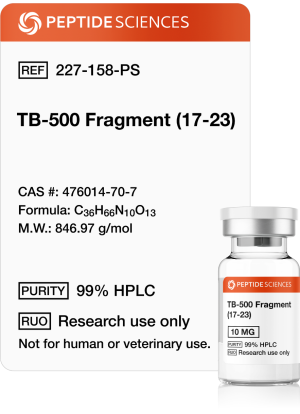
What is TB-500 Fragment (17-23)?
TB-500 Fragment (17-23) is a short synthetic peptide (heptapeptide) derived from a larger protein called Thymosin Beta-4.
- Sequence: LKKTETQ
- Represents amino acids 17–23 of the parent molecule
- Considered the core active region responsible for many biological effects (Limitless BioChem)
👉 It’s also sometimes called fequesetide in scientific literature.
What does it do? (research context)
TB-500 Fragment (17-23) is primarily studied for its role in cellular repair and regeneration mechanisms.
Research suggests it may:
1. Regulate cell migration
- Influences how cells move during tissue repair
- Important for wound healing models (ChemiNova A/S)
2. Interact with actin (cell structure protein)
- Helps organize the cytoskeleton
- Supports cell shape, movement, and replication (Chain X Peptides)
3. Promote tissue repair signaling
- Studied in muscle, tendon, and ligament models
- Linked to regeneration pathways (True Lab Peptides)
4. Support angiogenesis (blood vessel formation)
- Investigated for improving blood supply in damaged tissue (Limitless BioChem)
What “10mg TB-500 Fragment” actually means
When you see:
👉 “TB-500 Fragment (17-23) 10mg”
It typically refers to:
- A lyophilized (freeze-dried) peptide powder
- Total content = 10 milligrams per vial
- Used in laboratory experiments only
Most product listings clearly state:
“For research use only. Not for human consumption.” (Ameano Peptides)
⚠️ Important:
- This is not a medical dose
- Not an approved treatment
- Not a ready-to-use product
TB-500 vs TB-500 Fragment (important distinction)
There’s a lot of confusion here:
- Full TB-500 / Thymosin Beta-4
- Larger molecule (43 amino a.cids)
- Broader biological effects
- Fragment (17-23)
- Much smaller
- Focuses on actin-binding and repair signaling
- Used for more targeted research
👉 The fragment isolates the most active functional region of the larger peptide.
Community insight (why people search this)
From Reddit discussions:
“It isolates the region… associated with actin regulation” (Reddit)
Users often discuss it in relation to:
- Injury recovery research
- Muscle/tendon studies
- Regenerative biology
⚠️ These are anecdotal discussions, not clinical evidence.
What research focuses on
TB-500 Fragment (17-23) is studied in:
• Regenerative medicine models
- Tissue repair
- Wound healing
• Musculoskeletal research
- Tendon and ligament recovery
- Muscle regeneration
• Cellular biology
- Cytoskeleton organization
- Cell signaling pathways
• Inflammation and angiogenesis
- Blood vessel growth
- Immune response modulation
Regulatory status (very important)
TB-500 Fragment (17-23) is:
- ❌ Not FDA-approved
- ❌ Not a supplement
- ✔ Classified as a research-use-only peptide
Risks of “buy TB-500 Fragment 10mg”
Products marketed online may involve:
- Non-regulated manufacturing
- Mislabeling or inconsistent purity
- Lack of sterility
- No clinical safety data
Even claims like “99% purity” do not make them safe or approved.
Key misunderstanding: “10mg”
This is critical:
👉 “10mg” = total vial content
👉 NOT = dosage
👉 NOT = approved use
SEO strategy (important for you)
To rank safely, avoid:
Instead use:
- “TB-500 Fragment (17-23): What It Is and How It Works”
- “TB-500 Fragment vs Thymosin Beta-4 Explained”
- “TB-500 Peptide Research Guide (Benefits & Safety)”
Bottom line
TB-500 Fragment (17-23) is a research peptide derived from the active region of Thymosin Beta-4, studied for cell migration, tissue repair, and regenerative signaling. However, “10mg” products are laboratory-grade materials—not approved medical or consumer treatments.
If you want, I can next:
- Write a full 859-word SEO landing page (USA/UK optimized)
- Build a TB-500 vs BPC-157 vs GHK-Cu comparison (high ranking)
- Or create a complete recovery peptide SEO cluster for your site
Reviews
There are no reviews yet.