
What is this product?
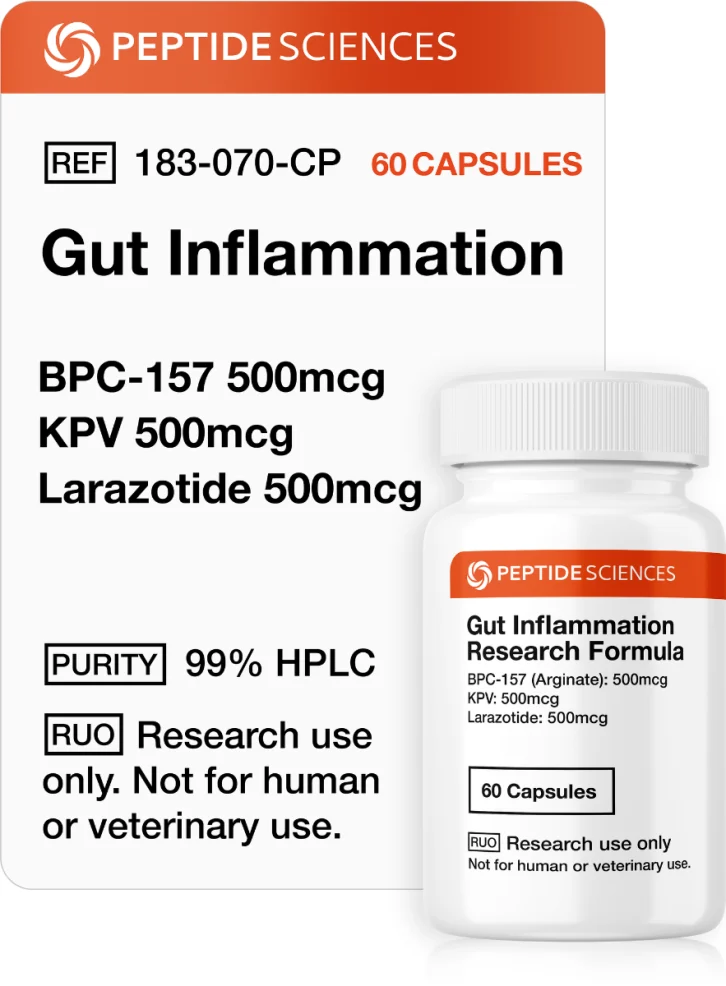
“Gut Inflammation (60 Capsules)” is not a standardized medicine. It’s a proprietary “research blend” supplement-style product typically marketed for gut/immune pathways.
It usually combines peptides such as:
- (Stable / arginate forms)
- (Ac-KPV-NH2 anti-inflammatory peptide fragment)
- (tight junction regulator used in celiac-related research)
These are often bundled into “gut repair stacks” in the peptide market.
What each ingredient is studied for
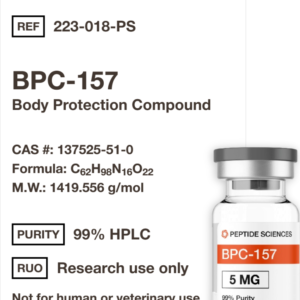
BPC-157
- Studied for tissue repair and wound healing
- Investigated in gut lining and inflammation models
KPV
- Anti-inflammatory tripeptide fragment of α-MSH
- Studied for immune and gut epithelial inflammation regulation
Larazotide
- Tight junction modulator
- Investigated in intestinal permeability (“leaky gut”) and celiac disease research
What “60 capsules” actually means
In listings like this:
- Capsules are usually blended or pre-filled research formulations
- Not standardized pharmaceutical dosing
- Often labeled:
“For research use only, not for human consumption” (clearcheck.ai)
Important reality check
Even though marketing makes it sound clinical:
- ❌ Not FDA-approved
- ❌ Not an approved digestive treatment
- ❌ No validated oral dosing protocols for these peptide combinations
- ✔ Classified as research chemical / experimental blend
And importantly: combining multiple experimental peptides does not automatically make a clinically proven therapy.
Why it’s popular
Search demand is driven by:
- “Leaky gut” discussions
- Inflammation and IBS-related communities
- Biohacking / peptide stack trends
- Online claims about gut lining repair
But most of the evidence for these compounds is preclinical or limited human research, not established clinical treatment use.
Key takeaway
This “Gut Inflammation (60 Capsules)” product is a commercial peptide blend built around experimental gut-inflammation–related molecules (BPC-157, KPV, Larazotide), but it is not an approved medication, and capsule blends like this are unregulated research formulations rather than standardized therapies.
Reviews
There are no reviews yet.