
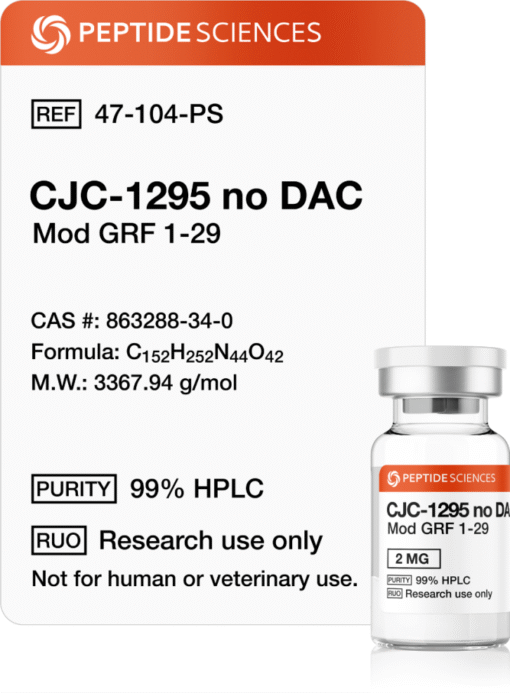
Buy CJC-1295 no DAC (Mod GRF 1-29) – High-Purity Research Peptides in the USA
If you are looking to buy CJC-1295 no DAC (Mod GRF 1-29) in the USA, it is essential to understand what these compounds are, how they are used in scientific research, and what defines a reliable supplier. (no DAC) and are synthetic peptides studied in endocrine and growth hormone research models. These compounds are not approved medications or dietary supplements, but are strictly research-use materials intended for controlled laboratory environments.
What is CJC-1295 no DAC?
(no DAC) is a synthetic analog of growth hormone-releasing hormone (GHRH). The “no DAC” version means it does not contain the Drug Affinity Complex modification, resulting in a shorter half-life and more immediate activity in experimental systems.
In laboratory research, CJC-1295 no DAC is used to study:
- Growth hormone secretion patterns
- Pituitary stimulation mechanisms
- Endocrine signaling feedback loops
Because of its short-acting profile, it is particularly useful in experiments focused on pulsatile hormone release dynamics.
What is Mod GRF 1-29?
(Modified Growth Hormone Releasing Factor 1-29) is a shortened synthetic fragment of natural GHRH. It has been chemically modified to increase stability and resist enzymatic breakdown, making it useful in controlled research environments.
In scientific studies, Mod GRF 1-29 is commonly used to evaluate:
- Growth hormone-releasing hormone receptor activity
- Hormonal signaling pathways
- Peptide stability and receptor binding dynamics
Why These Peptides Are Often Studied Together
CJC-1295 no DAC and Mod GRF 1-29 are frequently studied together because they both act on the same biological pathway—the growth hormone axis.
In research settings, their combined use may help scientists analyze:
- Hormonal pulse synchronization
- Pituitary response behavior
- Endocrine feedback regulation
- Receptor activation efficiency
This combination is strictly used for laboratory research purposes only, not for human consumption or clinical treatment.
Understanding the Research Use Format
Products labeled CJC-1295 no DAC (Mod GRF 1-29) typically refer to:
- Lyophilized synthetic peptides in vial form
- Research-grade material intended for laboratory use
- Often supplied individually or as paired research kits
- Not intended for consumer or therapeutic use
These peptides are commonly used in endocrine research studies to maintain consistent experimental conditions.
Research Applications in Scientific Studies
The combination of no DAC and is studied in several key research areas:
Growth Hormone Axis Research
- Pituitary hormone secretion modeling
- Growth hormone pulse pattern studies
- Hypothalamic signaling pathway analysis
Endocrine System Studies
- Hormonal feedback loop regulation
- Receptor activation and sensitivity research
- Neuroendocrine communication pathways
Cellular and Metabolic Research
- Protein synthesis signaling studies
- Metabolic response modeling in preclinical systems
- Hormone-driven cellular activity research
All applications are limited to controlled laboratory environments and preclinical research models.
What to Look for When Buying in the USA
Because peptide quality varies widely between suppliers, careful evaluation is essential when purchasing research compounds.
Purity and Analytical Verification
- Minimum ≥98% purity recommended
- Availability of a Certificate of Analysis (COA)
- Testing via HPLC and mass spectrometry
Manufacturing Standards
- Produced under controlled laboratory conditions
- Consistent synthesis and purification processes
- Batch-to-batch quality assurance systems
Packaging and Stability
- Supplied as lyophilized freeze-dried powder
- Sealed sterile vials for protection
- Stored away from heat, moisture, and light
Supplier Transparency
- Clear labeling of peptide identity and concentration
- Traceable batch numbers
- Reliable shipping and customer support within the USA
Proper Storage and Handling
To maintain stability and integrity of and CJC-1295 no DAC:
- Store in a cool, dry environment
- Refrigerate or freeze for long-term preservation (as recommended)
- Avoid repeated freeze-thaw cycles
- Use sterile laboratory handling techniques
Proper storage ensures peptide integrity and reproducible research outcomes.
Regulatory and Compliance Information
It is important to understand the regulatory status of these peptides:
- ❌ Not FDA-approved as drugs
- ❌ Not dietary supplements
- ❌ Not intended for human consumption
- ✔ Sold strictly as research-use-only compounds
Reputable suppliers will clearly label products as:
“For laboratory research use only. Not for human consumption.”
Any vendor making medical, therapeutic, or performance-enhancing claims should be considered unreliable.
Why These Peptides Are in High Research Demand
Interest in CJC-1295 no DAC and Mod GRF 1-29 continues to grow due to expanding research in:
- Growth hormone regulation studies
- Endocrine signaling pathway analysis
- Hormonal pulse dynamics modeling
- Metabolic and protein synthesis research
These peptides are widely used in experimental endocrinology to better understand complex hormonal systems.
Common Mistakes to Avoid When Buying
- Ignoring COA or purity documentation
- Confusing research peptides with approved medications
- Overlooking storage and handling requirements
- Trusting unverified anti-aging or performance claims
- Buying from suppliers without batch traceability
Avoiding these mistakes helps ensure more reliable and reproducible research outcomes.
Final Thoughts
Buying CJC-1295 no DAC (Mod GRF 1-29) in the USA requires careful attention to quality, documentation, and supplier credibility. and are specialized research peptides used in endocrine and growth hormone studies, but they are not consumer products or approved medical treatments.
For best results in research environments, prioritize suppliers that provide verified testing data, consistent manufacturing standards, and transparent labeling. As peptide research continues to expand, this combination remains an important tool in the study of hormonal signaling and endocrine system regulation.
Reviews
There are no reviews yet.