
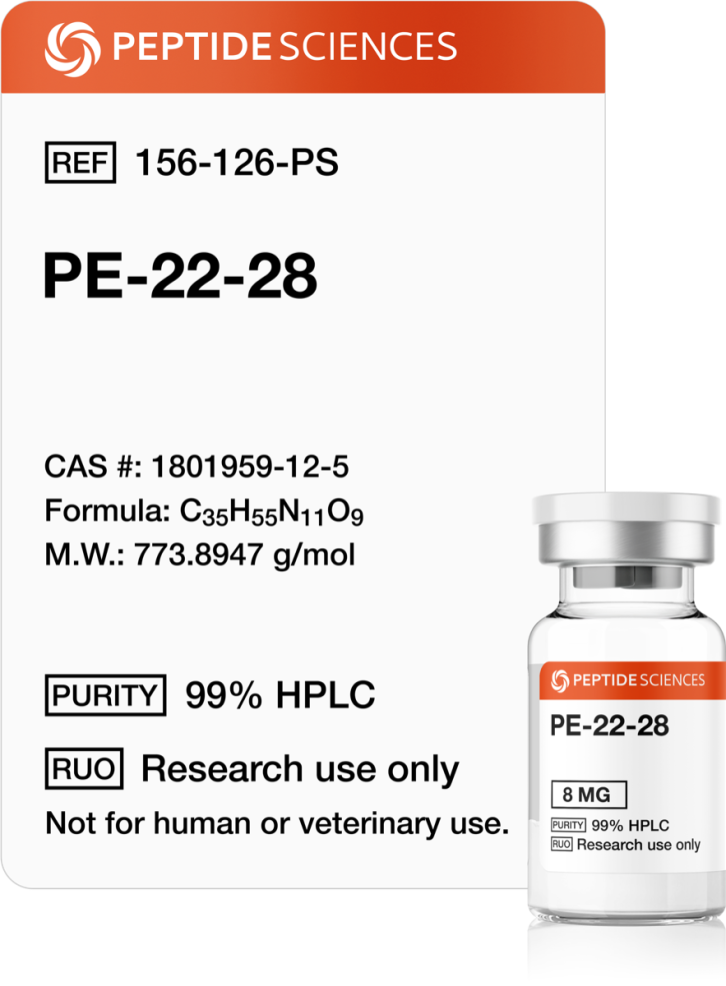
What is PE-22-28?
is a synthetic heptapeptide (7 amino acids) developed as a shortened, optimized version of a natural peptide called spadin.
Its main research interest is in the brain, especially around:
- Mood regulation
- Neurotransmission
- Neuroplasticity (brain adaptability)
It works by targeting a specific ion channel called TREK-1 (a potassium channel in neurons). (Peptides Institute)
How it works (simple explanation)
PE-22-28 is studied as a TREK-1 channel inhibitor.
When TREK-1 is blocked:
- Neurons become more excitable
- Serotonin signaling may increase
- Brain circuits linked to mood and motivation may activate more easily
Some animal studies suggest this pathway could produce rapid antidepressant-like effects compared to traditional SSRIs. (Peptide Database)
Why it’s called a “research peptide”
PE-22-28 is not an approved medicine.
It is:
- ❌ Not FDA-approved
- ✔ Studied in preclinical (mainly animal) research
Online “8mg vials” typically mean:
- Freeze-dried laboratory material
- Used for experimental research only
- Not standardized for human use
What “8mg PE-22-28” actually refers to
A label like “PE-22-28 8mg” usually means:
- Total peptide content = 8 milligrams
- Supplied as lyophilized powder
- Must be reconstituted in lab conditions
There is no medically established dosing for consumers, only experimental protocols in research models.
What research is exploring
Most studies focus on:
Brain and mood pathways
- TREK-1 inhibition
- Serotonin neuron activation
- Stress response modulation
Neuroplasticity
- Hippocampal signaling
- Potential rapid adaptation in neural circuits
Depression models (preclinical)
- Antidepressant-like effects in animals
- Faster onset than SSRIs in experimental settings
Important safety reality
Because PE-22-28 is experimental:
- Its long-term safety in humans is unknown
- There are no approved clinical dosing guidelines
- Most suppliers explicitly label it:
“For research use only. Not for human consumption.”
Why it’s popular online
Interest comes from:
- “Fast-acting antidepressant peptide” discussions
- Biohacking / nootropic communities
- Comparisons with Semax, Selank, and other neuropeptides
- Experimental neuroscience curiosity
SEO insight (if you’re building a site)
To rank safely and avoid restrictions, avoid:
Instead use:
- “PE-22-28: What It Is and How It Works”
- “PE-22-28 TREK-1 Peptide Explained (Research Guide)”
- “PE-22-28 vs Semax vs Selank Comparison”
This helps you:
- Target high-intent informational traffic
- Avoid ad compliance issues
- Build authority in neuroscience peptide content
Bottom line
is a research-only neuropeptide studied for its effects on TREK-1 potassium channels and potential mood-related brain signaling, but “8mg” products are strictly laboratory materials—not approved medical or consumer treatments.
Reviews
There are no reviews yet.