
What is Matrixyl?
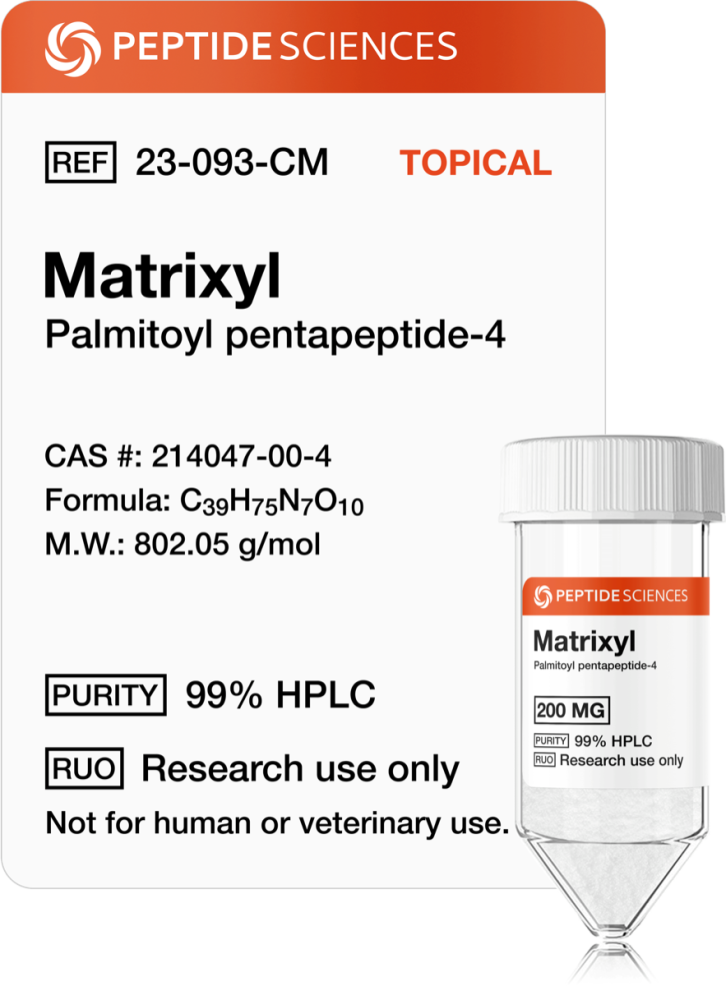
is a synthetic cosmetic peptide, most commonly known as Palmitoyl Pentapeptide-4 (and related variants like Pal-KTTKS).
It is used in skincare research and formulations because it acts as a “signal peptide” that communicates with skin cells.
What it does (in skincare research)
Matrixyl is mainly studied for:
✔ Collagen signaling
- Encourages fibroblasts to increase collagen production
- Supports skin firmness and elasticity (Biotech Peptides)
✔ Anti-aging effects
- Helps reduce appearance of fine lines and wrinkles
- Improves skin texture over time
✔ Skin repair signaling
- Mimics fragments of broken-down collagen
- Triggers the skin’s natural “repair response” (FormBlends)
What “200mg topical Matrixyl” actually means
A listing like:
👉 Matrixyl 200mg (Topical)
usually refers to:
- A bulk cosmetic peptide powder
- Freeze-dried (lyophilized) form
- Intended for lab research or formulation into skincare
Typical supplier descriptions confirm:
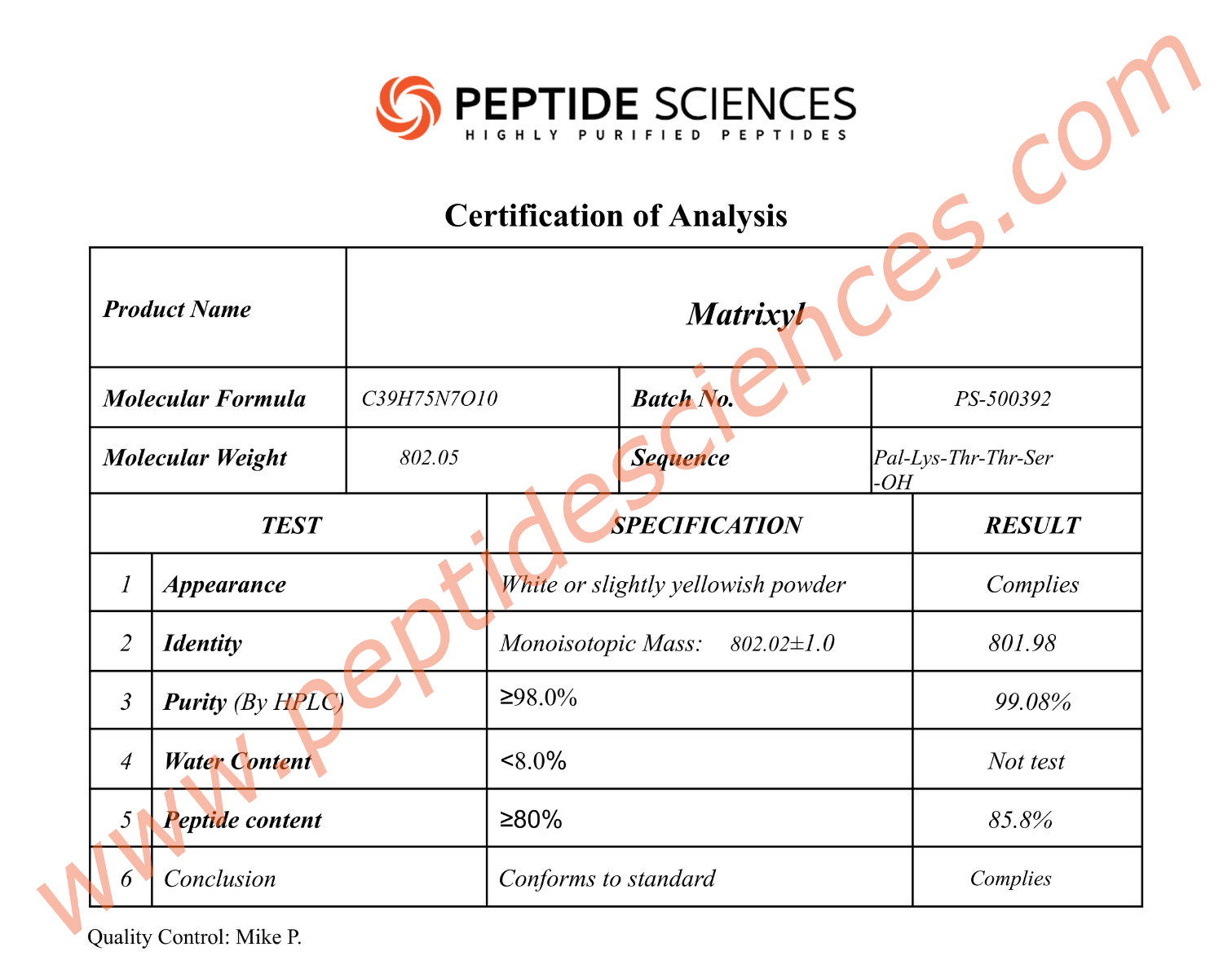
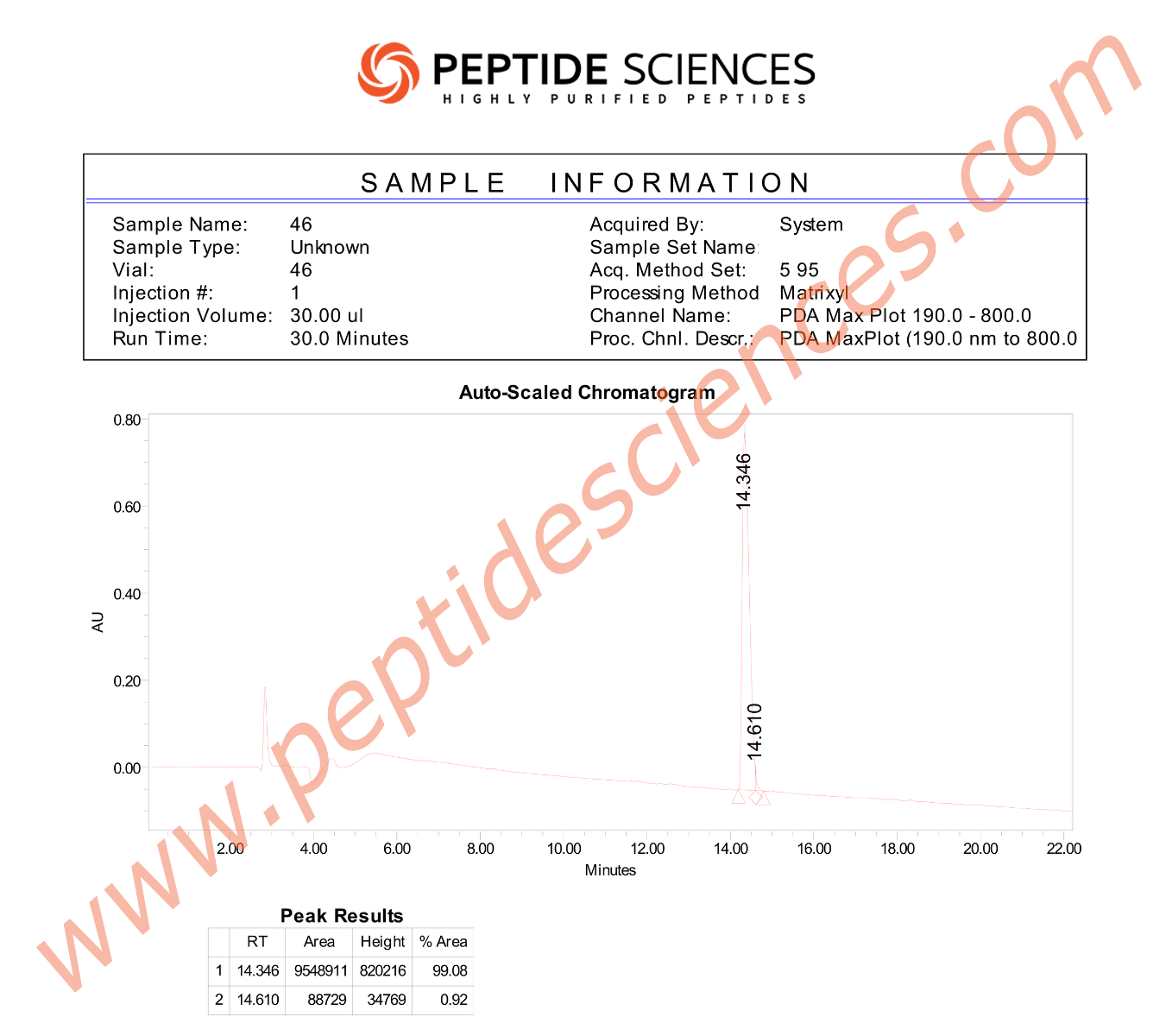
- ≥99% purity
- Not a finished skincare product
- Requires dilution into a serum or cream base (WestLab Chemicals)
Important reality check
Even though it’s widely sold online:
- ❌ Not a drug
- ❌ Not FDA-approved as a treatment
- ❌ Not meant to be applied directly as powder
- ✔ Only a cosmetic research ingredient
Dermatology sources describe it as a signal peptide used in anti-aging skincare formulations, not a standalone treatment.
How it’s actually used
In real cosmetic products, Matrixyl is:
- Added in very low concentrations
- Mixed into serums (often with hyaluronic acid)
- Combined with other peptides like:
- Argireline
- Copper peptides
- GHK-Cu
Why it’s popular
Interest comes from:
- Anti-aging skincare trends
- “Peptide serums” marketing
- Dermatology research into collagen signaling
- Comparisons with retinol (often marketed as gentler)
Safety reality
Matrixyl is generally considered:
- Low irritation risk in finished skincare
- Not cytotoxic at cosmetic levels
- But raw powder is not meant for direct skin use
Bottom line
is a cosmetic signal peptide used to stimulate collagen-related skin repair pathways, but “200mg topical” products are raw formulation materials—not ready-to-use skincare or approved medical treatments.
Reviews
There are no reviews yet.