
What is KPV?
(Lys-Pro-Val) is a small tripeptide fragment derived from α-MSH (alpha-melanocyte-stimulating hormone).
In research settings, it’s studied mainly for its role in:
- Inflammation regulation
- Gut lining protection
- Immune signaling balance
- Tissue repair pathways
What “Ac-KPV-NH2” means
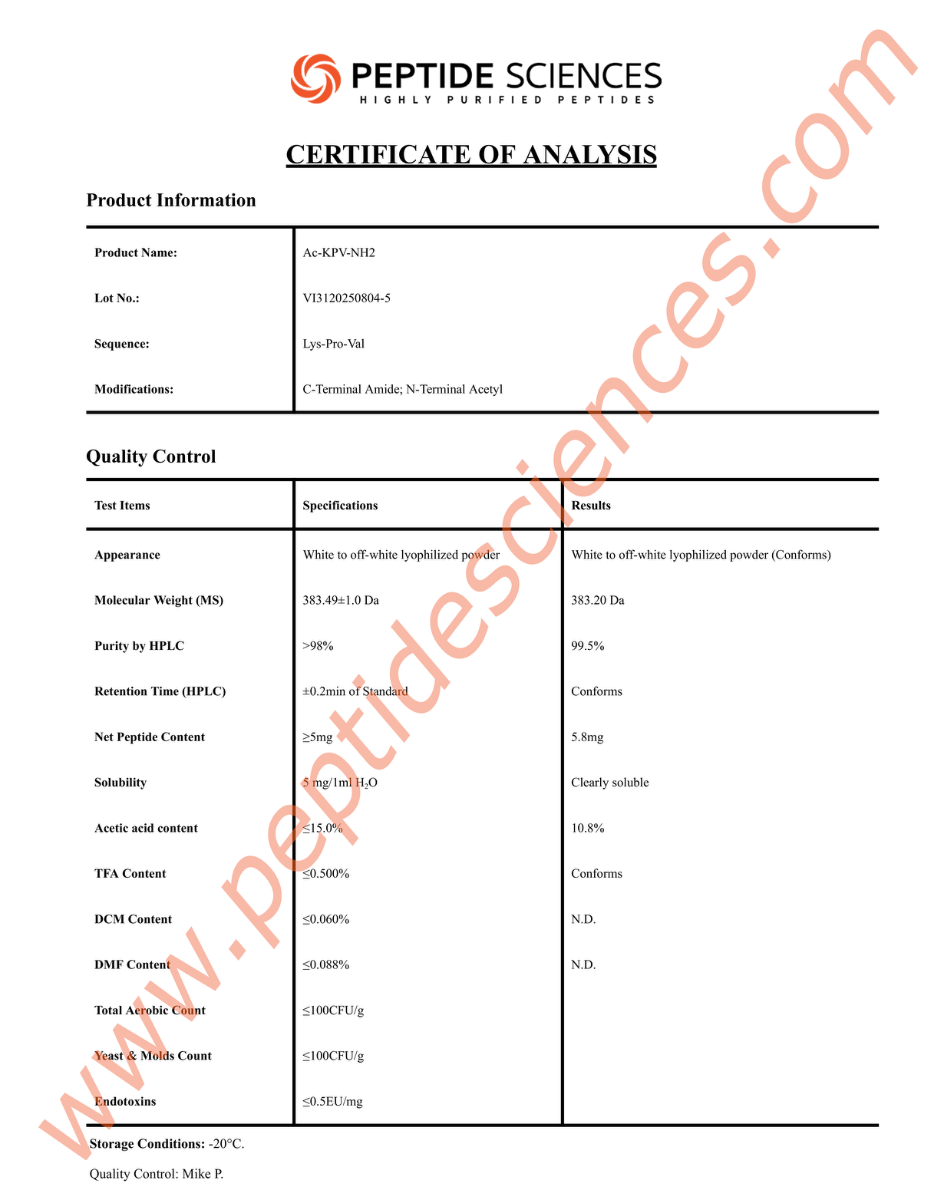
is a chemically modified version of KPV:
- Ac- (acetylated) → increases stability
- NH2 (amidated) → improves resistance to breakdown
👉 These modifications make it more stable in lab and experimental models compared to plain KPV.
What it’s studied for
Research interest focuses on:
Anti-inflammatory pathways
- Modulates NF-κB signaling (inflammation control pathway)
- Reduces inflammatory cytokine activity in models
Gut and epithelial health
- Studied for intestinal barrier protection
- Used in inflammatory bowel research models
Skin and tissue repair
- Investigated in wound healing and epithelial recovery
What “5mg vial” actually means
A listing like:
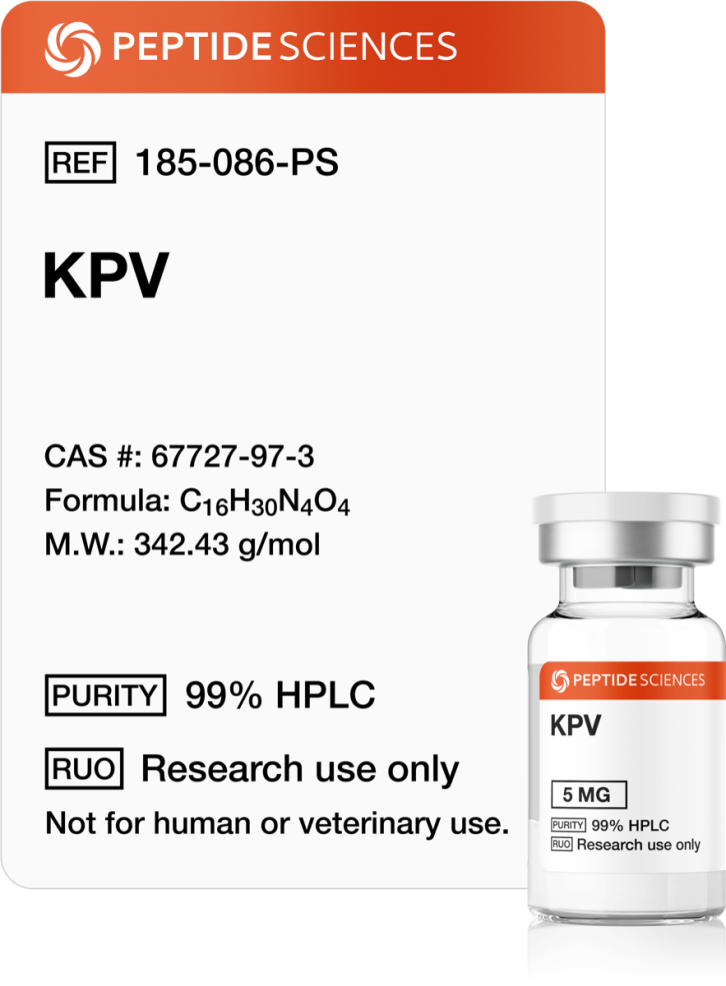
👉 KPV (Ac-KPV-NH2) 5mg
usually refers to:
- A freeze-dried (lyophilized) peptide vial
- Total content = 5 milligrams
- Intended for laboratory or research use only
Example vendor labeling confirms:
“For research use only. Not for human consumption.” (Peptides Sciences Store)
Important reality check
Even though it’s widely sold online:
- ❌ Not FDA-approved
- ❌ Not a supplement
- ❌ No standardized human dosing
- ✔ Classified as a research chemical / experimental peptide
Why it’s popular
Interest comes from:
- Gut health discussions (IBD/intestinal barrier research)
- Skin healing and inflammation forums
-
Comparisons with peptides like:
But unlike those marketed claims, human clinical evidence for KPV is still limited.
Risks and limitations
- No established therapeutic dosing in humans
- Variable product quality between suppliers
- Mostly preclinical (cell/animal) research
- Misuse risk due to lack of medical guidance
Bottom line
(including ) is a research tripeptide studied for inflammation and epithelial repair pathways, but “5mg vial” products sold online are unregulated laboratory materials—not approved medical or consumer treatments.
Reviews
There are no reviews yet.