
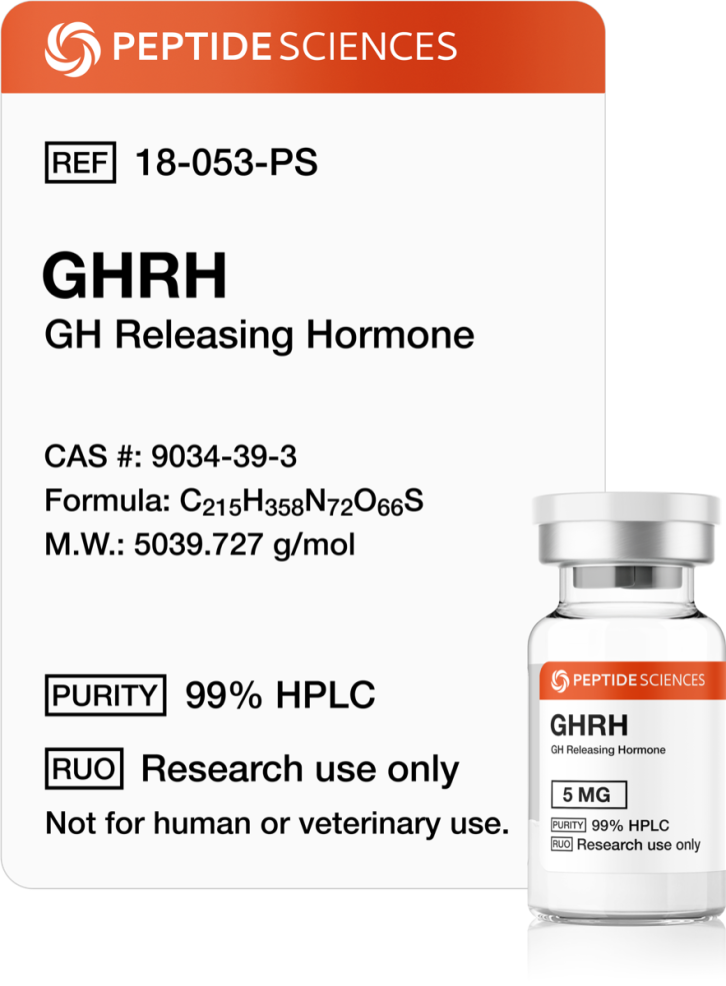
What is GHRH?
stands for Growth Hormone–Releasing Hormone.
It is a natural hormone produced in the hypothalamus that tells the pituitary gland to release growth hormone (GH).
In research and clinical medicine, GHRH is involved in:
- Regulating growth hormone pulses
- Controlling IGF-1 levels indirectly
- Studying pituitary function and endocrine signaling
“GHRH 5mg vial” — what it actually is
When you see something like:
👉 GHRH 5mg
it usually refers to a synthetic GHRH analog, not the exact natural hormone itself.
Common examples include:
- Sermorelin (GHRH 1–29 fragment)
- Tesamorelin (longer-acting analog)
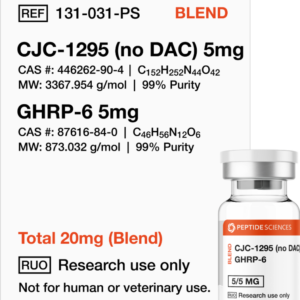
- CJC-1295 (no DAC)
These are typically sold as:
- Freeze-dried peptide powder (lyophilized)
- 5mg per vial (research format)
- Labeled “research use only” in most cases
Example listings describe them as GHRH receptor agonists used to stimulate growth hormone release in lab models (bluebiotech.health)
What it does in research terms
GHRH or its analogs are studied for:
- Stimulating growth hormone secretion from the pituitary
- Increasing IGF-1 levels downstream
- Studying pulsatile hormone regulation
- Metabolic and endocrine system research (bluebiotech.health)
Important reality check
Even though it’s widely marketed online:
- ❌ Not FDA-approved as a general supplement
- ❌ Not a standalone consumer hormone therapy
- ❌ No standardized dosing for unsupervised use
- ✔ Classified as research chemical / peptide analog
Most “GHRH 5mg” products are sold strictly as:
“For laboratory research use only, not for human consumption”
Why people search for it
Interest usually comes from:
- Growth hormone optimization discussions
- Anti-aging / “biohacking” communities
- Fat loss and recovery forums
- TRT / hormone protocol comparisons
But real clinical use of GHRH-related drugs is narrow and medically supervised, not consumer-based.
Key takeaway
is a natural hormone signal that triggers growth hormone release, but “5mg vial” products are usually synthetic research analogs (like Sermorelin or CJC-1295) sold as unregulated laboratory materials—not approved consumer therapies.
Reviews
There are no reviews yet.