
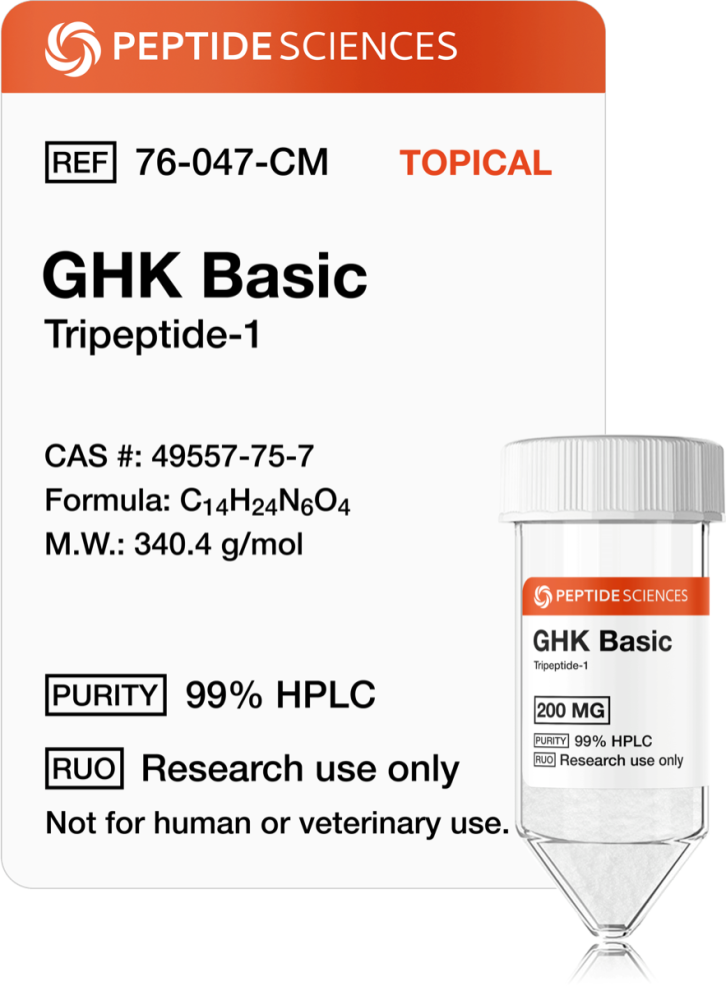
What is GHK Basic (Tripeptide-1)?
is a naturally occurring tripeptide (Glycine–Histidine–Lysine) found in human plasma, saliva, and tissue fluids.
It is also closely related to the better-known form:
- (copper-bound version)
In research, it’s studied mainly for:
- Skin repair signaling
- Collagen and extracellular matrix regulation
- Wound-healing and cellular stress response pathways
What “200mg topical” means
A listing like:
👉 GHK Basic 200mg (Tripeptide-1) topical
usually refers to:
- 200mg of freeze-dried peptide powder
- Intended to be mixed into topical formulations (serums/creams)
- Not a finished cosmetic product
- Sold as research-use material
Example listings describe it as a lyophilized tripeptide used for skincare research and extracellular matrix studies (Peptides Sciences Store).
Why it’s popular in skincare research
In lab and cosmetic research contexts, GHK is studied for:
- Supporting collagen production pathways
- Influencing skin remodeling signals
- Antioxidant and wound-response gene activity
- Interaction with copper ions (in GHK-Cu form)
Because of this, it’s often marketed in “anti-aging” or “skin regeneration” product categories—even though those claims vary widely in strength.
Important reality check
Even though it’s widely sold online:
- ❌ Not FDA-approved as a drug
- ❌ Not a regulated cosmetic active at these concentrations
- ❌ No standardized human dosing for peptide powders
- ✔ Classified as research chemical / cosmetic research ingredient
Most vendors clearly label it:
“For laboratory or topical research use only, not for human consumption” (Core Peptides)
Why confusion happens
Products like this are often grouped with:
- Cosmetic peptides (anti-aging skincare ingredients)
- Research peptides (lab-only materials)
- “Bioactive skincare actives” marketed online
So the same molecule can appear in:
- Scientific research catalogs
- DIY skincare forums
- Unregulated “cosmetic peptide” shops
Key takeaway
() is a naturally occurring skin-related signaling peptide studied for collagen and tissue repair pathways, but “200mg topical” products sold online are unregulated research materials—not standardized or approved skincare treatments.
Reviews
There are no reviews yet.