
OVERVIEW
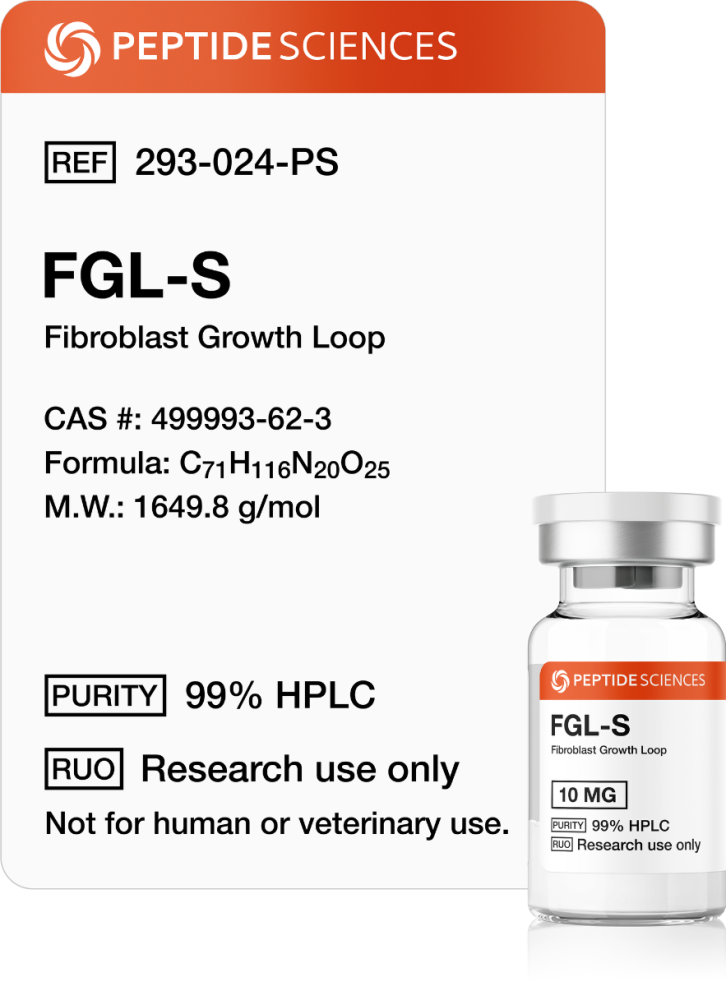
FGL-S 10 mg is a synthetic research peptide derived from a specific motif of the neural cell adhesion molecule (NCAM), a protein expressed on the surface of neurons and glial cells involved in neural development, adhesion, and signaling. The peptide sequence reproduces the fibroblast growth loop (FGL) domain of NCAM and has been studied in preclinical research for its ability to activate fibroblast growth factor receptors (FGFRs), particularly FGFR1, which plays a role in neuroplasticity and intracellular signaling pathways such as ERK and PI3K/Akt. In laboratory models, FGL-type peptides have demonstrated effects on neurite outgrowth, synaptogenesis, and long-term potentiation (LTP) — cellular processes linked to learning, memory formation, and neuronal connectivity. Some studies also report modulation of inflammatory responses in glial cells and potential neuroprotective effects against age-related changes in microglial activation.
Despite scientific interest, FGL-S 10 mg is supplied strictly for research use only and is not approved for human therapeutic or medical use by the U.S. Food and Drug Administration or similar regulatory authorities. The majority of evidence for its biological activity comes from in vitro cell culture studies and animal experiments, and there is no established clinical evidence demonstrating safety, effectiveness, or appropriate dosing in humans. Products containing FGL-S are typically labeled for laboratory investigation, and their purity, quality, and composition can vary between sources. Because of this, self-administration outside of controlled research environments carries health, safety, and ethical concerns, and individuals should consult qualified healthcare professionals rather than rely on unregulated compounds.
Reviews
There are no reviews yet.