
OVERVIEW
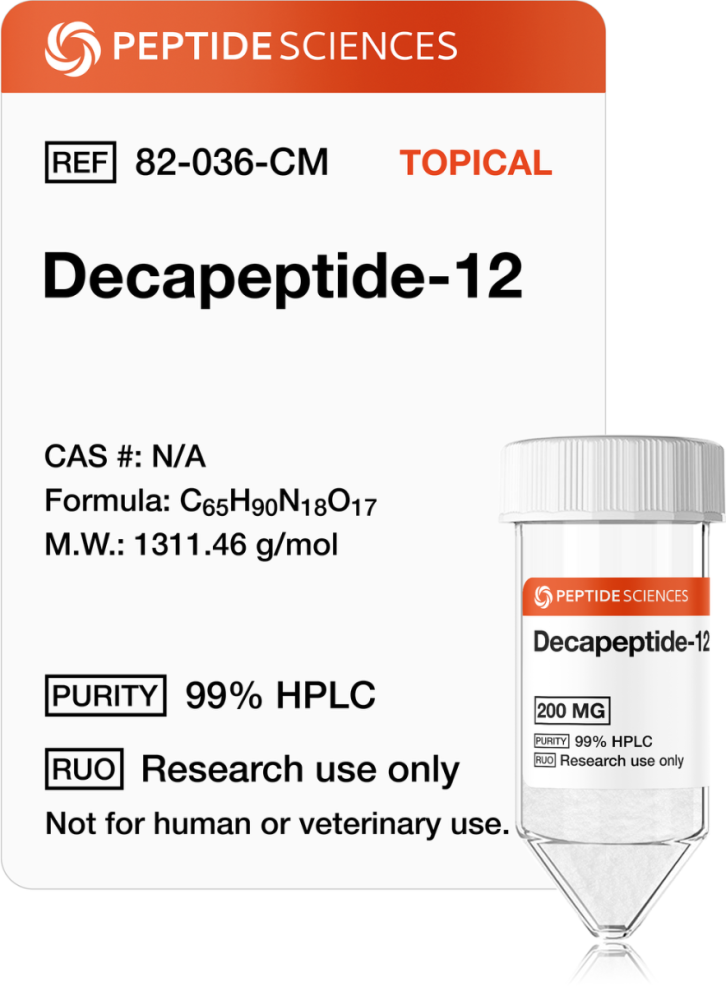
Decapeptide-12 (Topical) is a synthetic 10-amino-acid peptide widely used in cosmetic and dermatological formulations for its potential skin-beneficial properties. It is most commonly marketed for its role in inhibiting tyrosinase, a key enzyme involved in the production of melanin — the pigment responsible for skin tone. By modulating tyrosinase activity, Decapeptide-12 may help reduce hyperpigmentation, dark spots, and uneven skin tone in topical skincare applications. In addition, some studies suggest that this peptide can support overall epidermal health by promoting regulated melanin distribution and potentially enhancing cellular communication within the skin’s pigment-producing layers. Because of these effects, Decapeptide-12 is found in serums and treatments targeting melasma, post-inflammatory pigmentation, and photoaging concerns.
Despite its popularity in cosmetic products, Decapeptide-12 is classified as a cosmetic ingredient rather than a regulated pharmaceutical drug, and it is not approved by the U.S. Food and Drug Administration for the treatment of specific medical conditions. Scientific evidence supporting its effectiveness in humans comes largely from small clinical studies and formulation research rather than large, well-controlled trials, and results can vary between individuals and products. Because topical peptides can differ in purity and formulation stability, consumers should look for products from reputable brands, perform patch testing to check for sensitivity, and consult a dermatologist if they have underlying skin concerns or conditions. Decapeptide-12 is generally considered safe when used as directed in topical products, but realistic expectations and professional guidance help ensure the best outcomes.
Reviews
There are no reviews yet.