
OVERVIEW
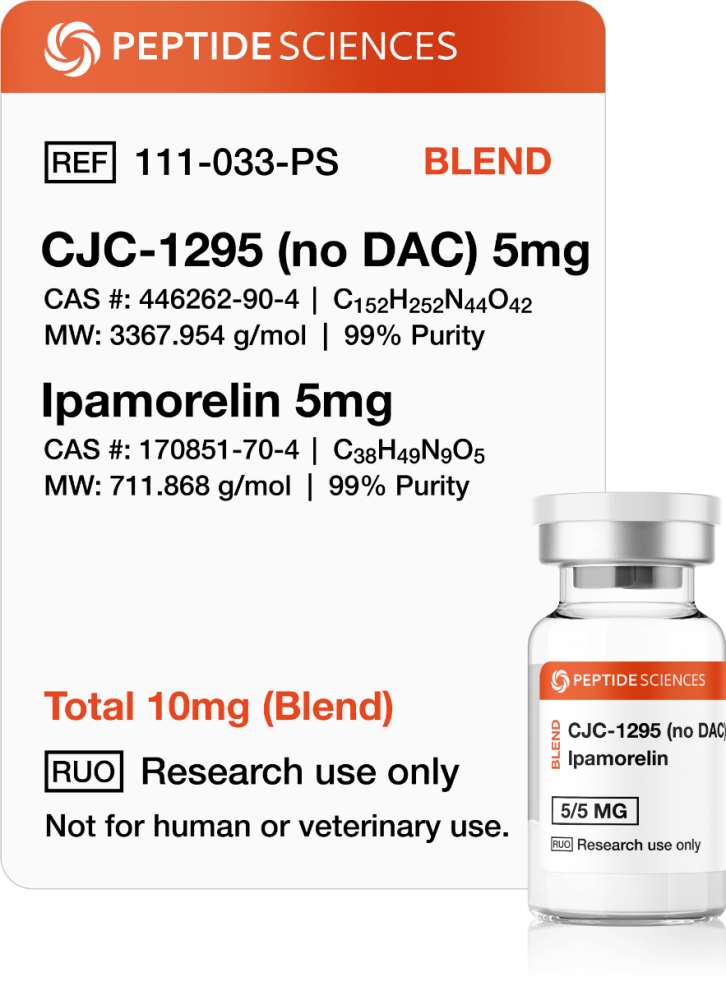
CJC‑1295 (no DAC) + Ipamorelin 10 mg (Blend) is a combination of two synthetic peptides commonly used in research to investigate growth hormone (GH) release mechanisms. CJC‑1295 (no DAC) is a modified analog of growth hormone‑releasing hormone (GHRH) that stimulates the pituitary gland to release GH. Without the drug affinity complex (DAC), this version has a shorter half‑life and promotes pulsatile GH secretion, resembling natural physiological release patterns. Ipamorelin is a growth hormone‑releasing peptide (GHRP) that specifically activates the growth hormone secretagogue receptor (GHS‑R1a or ghrelin receptor), stimulating additional GH release while minimally affecting appetite and cortisol compared with some other GHRPs. When studied together in laboratory settings, this blend engages complementary pathways — CJC‑1295 acting through the GHRH receptor and Ipamorelin via the ghrelin receptor — with the goal of enhancing overall GH pulse amplitude. Researchers utilize this combination to explore the regulation of the somatotropic axis, metabolic signaling, and tissue responses to heightened GH levels in controlled experimental models.
Despite research interest, the CJC‑1295 (no DAC) and Ipamorelin blend is not approved for therapeutic use by the U.S. Food and Drug Administration or other major regulatory bodies. Evidence supporting its effects comes predominantly from preclinical studies, small trials, or early‑stage research rather than large, well‑controlled clinical trials that establish safety, effectiveness, and appropriate human dosing. Products marketed with these peptides are typically labeled “for research use only,” meaning they are not manufactured to pharmaceutical quality standards, and their purity and potency can vary. Because of these limitations and the absence of regulatory oversight, self‑administration outside research settings carries safety, ethical, and legal concerns. Individuals considering peptide‑based interventions should consult qualified healthcare professionals and rely on evidence‑based treatments rather than experimental blends.
Reviews
There are no reviews yet.