
OVERVIEW
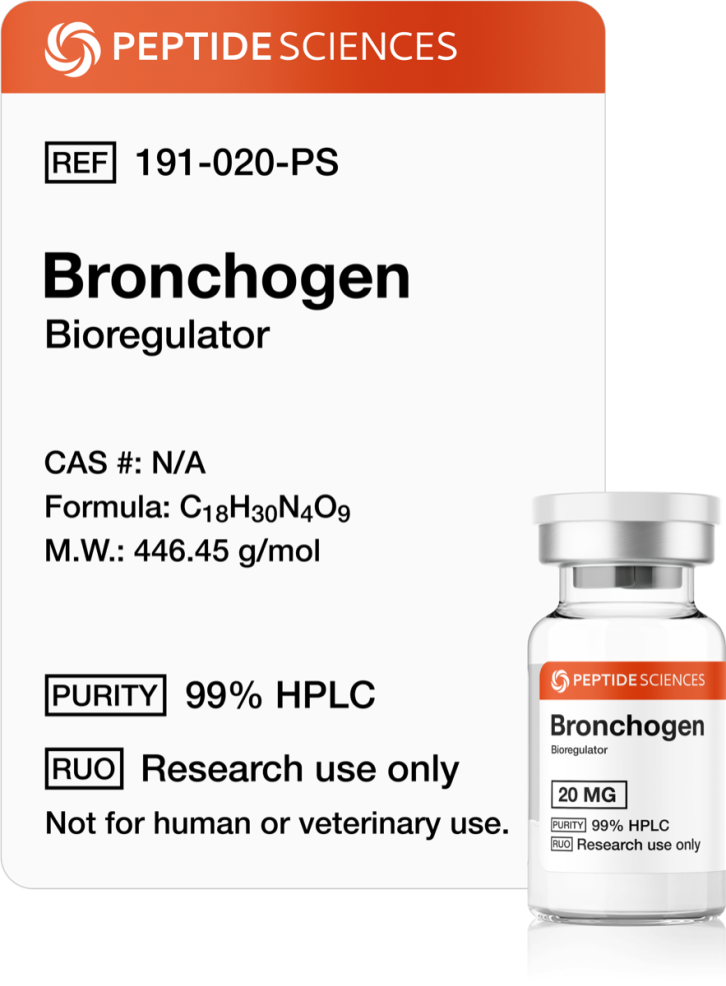
Bronchogen 20 mg (Bioregulator) is a short synthetic tetrapeptide consisting of four amino acids (alanine, glutamic acid, aspartic acid, and leucine) studied primarily in preclinical research for its potential effects on respiratory tissue and lung biology. It is classified among “bioregulator” peptides — small sequence‑defined molecules thought to influence gene expression, DNA stability, and cellular processes in tissue‑specific ways. In laboratory settings, Bronchogen has been investigated for its ability to modulate inflammation, support epithelial cell function in bronchial tissue, and influence pathways involved in tissue repair and homeostasis. Some research suggests it may interact with DNA-regulatory mechanisms and influence transcription programs linked to epithelial regeneration, surfactant production, and responses to chronic stress in lung models. These actions have sparked interest in studying Bronchogen in contexts such as chronic obstructive pulmonary disease (COPD), chronic bronchitis, and lung aging, although the bulk of data comes from in‑vitro and animal models rather than large human trials.
Despite ongoing research, Bronchogen is not approved by regulatory authorities such as the U.S. Food and Drug Administration for medical use in humans. The peptide is typically sold as a research chemical and labeled “for laboratory use only,” meaning it is not intended to diagnose, treat, cure, or prevent any disease and its quality, purity, and effects for human administration are not regulated. Safety profiles and effective dosing in humans are not established, and long‑term consequences remain unknown; most supportive information comes from experimental studies rather than controlled clinical trials. Because of these limitations, Bronchogen should only be handled within qualified research settings, and individuals should consult healthcare professionals rather than self‑administer unapproved compounds.
Reviews
There are no reviews yet.